Capacity
Energy generation potential
Captures the system’s ability to create usable power through talent density, resilience, and operating headroom.
Companies don’t fail because of lack of effort, talent, or strategy. They fail because their systems lose energy before it reaches execution. Decisions slow down as they move through layers. Work gets reinterpreted across teams. Coordination introduces friction that wasn’t visible at the start. What begins as clear intent gradually fragments, and by the time it reaches execution, only part of the original energy remains. This is why organizations can feel like they are doing everything right—and still underperform.
These losses are not random. They are structural. As organizations grow, complexity increases. Communication becomes less direct, decision pathways become longer, and alignment becomes harder to maintain. Each of these introduces resistance into the system. That resistance does not stop work—it absorbs it. Effort still exists, but less of it produces results. This is the difference between companies that feel busy and companies that actually perform. One is scaling effort. The other is preserving it.
Energy Loss Map
Structural leakage view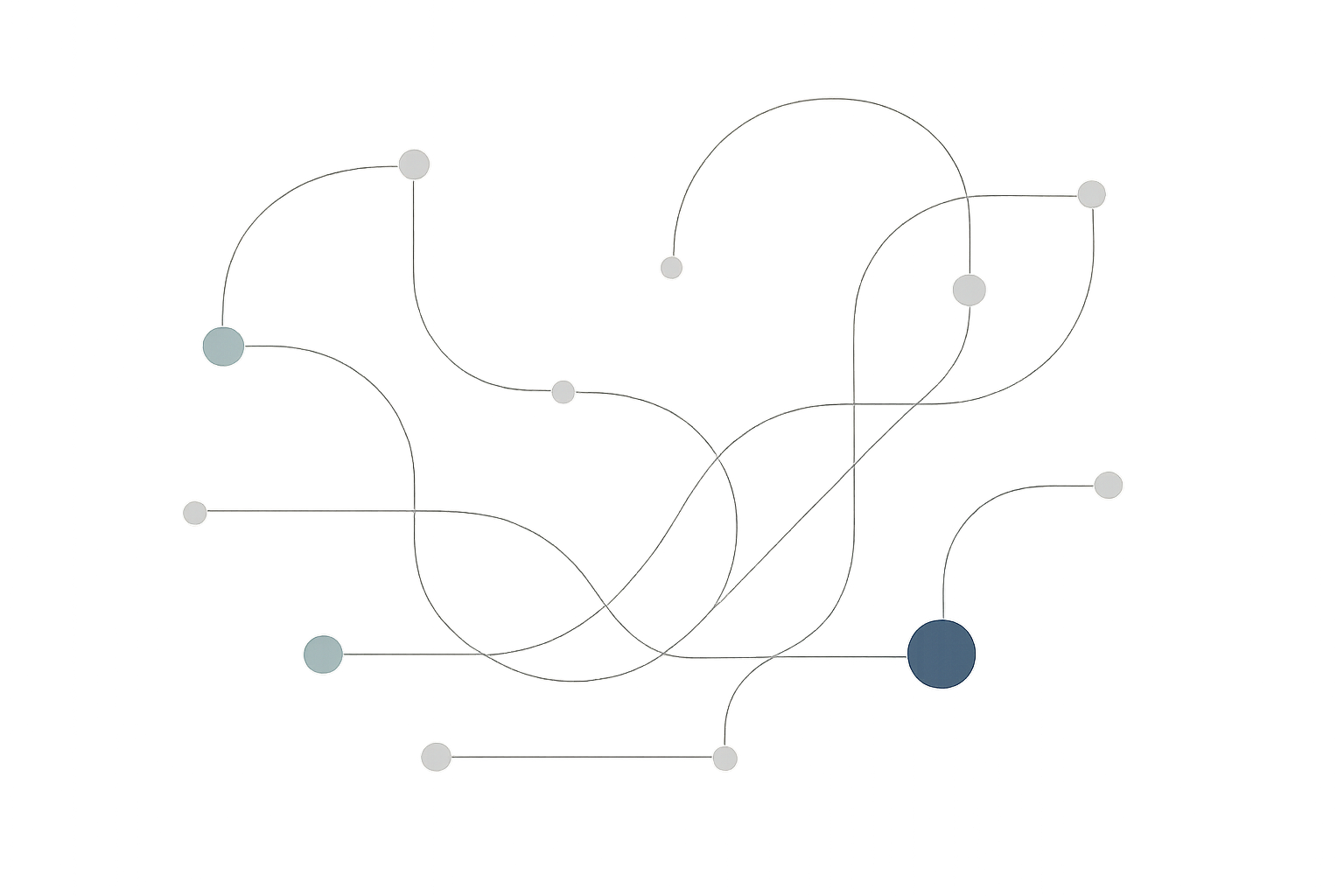
Energy Retention
Tracks how much effort survives each layer.
Friction Absorption
Quantifies drag created by coordination and delay.
The Problem
Most companies try to improve performance by adding more. More strategy. More hiring. More tools. More effort. But performance is not created by increasing input. It is created by how efficiently that input moves through the system. When alignment breaks, effort fragments. When structure expands without control, resistance increases. When communication distorts, execution slows. The system still operates—but it produces less output per unit of effort.
This is why many companies plateau without understanding why. They continue to invest in capability while ignoring system behavior. Over time, internal resistance compounds. Decision cycles lengthen, coordination costs rise, and more effort is required to maintain the same level of performance. The system does not fail—it becomes inefficient. And inefficiency scales.
Core tension
More input does not guarantee more output when system efficiency degrades.
Primary risk
Internal resistance compounds as scale and complexity expand.
Visible result
Decision cycles slow, coordination costs rise, and performance plateaus.
The Model
We treat businesses as energy systems governed by conductance physics. Every organization generates capacity through talent and resilience. Every organization loses energy through drag, structural mass, and internal friction. Output is determined by how efficiently energy flows between those forces. This is not a metaphor. It is a measurable system.
When capacity is high but resistance is also high, performance remains constrained. When resistance is low, even moderate capacity can produce strong output. This is why some organizations outperform others without appearing fundamentally stronger. They are not doing more. They are losing less.
Capacity
Captures the system’s ability to create usable power through talent density, resilience, and operating headroom.
Resistance
Quantifies friction created by misalignment, rework, latency, and structural mass that slows throughput.
Conductance
Measures how cleanly energy moves across teams, decisions, and constraints without leakage or conversion loss.
Output
The observable outcome of capacity minus resistance, scaled by conductance—what the system can truly deliver.
Full Score System
Your organization is measured across seven core system outputs. These scores are not independent—they are connected expressions of how your system operates. Together, they show how efficiently your business converts effort into results, how stable it is under pressure, and how likely it is to sustain or degrade over time.
RIS
Resonance Index Score
Measures how efficiently internal effort converts into execution.
TIS
Total Impact Score
Measures how effectively execution translates into real-world outcomes.
OHI
Operational Health Index
Measures system stability and internal consistency.
PRI
Preparedness Readiness Index
Measures how much capacity is usable under real conditions.
CRI
Collapse Risk Index
Measures instability and the likelihood of systemic breakdown.
TRIS
Total Resonance Index Score
Measures overall system performance across all layers.
CICS
Corporate Index Conductance Score
Measures total system reliability and efficiency.
Individually, each score highlights a specific dimension of system behavior. Together, they form a complete picture of how your organization functions. A change in one area propagates through the others, allowing you to see not just where you are—but how your system will behave as it evolves.
System Snapshot
Illustrative output from a high-efficiency operating system. These scores represent how efficiently energy moves through the system, how effectively execution converts into outcomes, and how stable the organization remains under pressure.
These scores are not isolated metrics. A shift in one propagates through the others, allowing the system to identify inefficiency, instability, and scaling constraints before they become operationally visible. The result is not just insight into current performance, but predictive understanding of how the system will behave as conditions change.
Snapshot Summary
High EfficiencyEnergy Flow
Execution energy retains velocity with minimal internal resistance, keeping teams in steady output cadence.
Outcome Conversion
Operational actions translate into measurable results without leakage between intent and delivery.
Stability Signal
Instability risk remains contained, supporting growth without turbulence across layers.
6. WHAT YOU RECEIVE
The output is a full system report that explains how your company actually functions—not how it is described internally. You see where energy is lost, where performance is constrained, and how the system behaves under change. More importantly, you see exactly how to improve it.
This removes ambiguity. Instead of relying on intuition or fragmented data, you operate with a unified system view. We simulate how changes to your system will affect performance before those changes are implemented. That clarity allows you to make decisions with confidence—and to understand the consequences before they happen.
7. WHY THIS MATTERS
Most companies scale effort. Very few scale efficiency. If your system loses a meaningful percentage of its energy internally, increasing effort only increases waste. Improving the system increases output without increasing input. This is the difference between linear growth and compounding performance.
Efficiency is not just an operational advantage—it is a strategic one. Companies that preserve energy outperform those that consume it, even when resources appear similar. Small reductions in internal resistance often produce disproportionately large improvements in output due to the nonlinear nature of conductance efficiency. Over time, this gap becomes significant.
Engagements are scoped based on organizational complexity, operational scale, and diagnostic depth. The objective is not to deliver generic consulting output, but to model the actual behavior of the system and identify the variables that most strongly influence performance, stability, and scalability.
Each engagement is structured to match the complexity of the organization being modeled. This allows the diagnostic process to remain precise, actionable, and operationally relevant rather than generalized.
High-performing organizations are rarely defined by effort alone. They are defined by how efficiently effort survives the system. Visibility into system behavior changes how decisions are made, how resources are deployed, and how growth is managed under increasing complexity.
Most companies operate without a clear understanding of how their internal systems behave under scale, pressure, and change. Once those dynamics become measurable, inefficiency becomes identifiable, risk becomes visible, and performance becomes controllable.
Closing Signal
The LES diagnostic is engineered for leaders who prioritize clarity over conjecture. It converts system behavior into measurable outputs, enabling decisions grounded in structure, not assumption.
Run My System
When you are ready, the system analysis delivers a definitive view of friction, capacity, and performance limits so you can move with certainty.
Visual System Direction
Establish a restrained, institutional visual system that conveys precision and analytical confidence. The design language should feel engineered rather than branded — quiet authority, high signal, and measurable clarity.
Intended look & feel
Recommended visual types
Design Rules
Minimal color usage; accents only for thresholds, alerts, or priority signals.
Clean typography with controlled weights, generous leading, and strict alignment.
High readability through whitespace, crisp dividers, and predictable structure.
Restrained visuals: no glossy UI, no playful icons, no ornamental flourish.
Avoid
Goal: LES reports should read like high-end analytical operating documents — not presentation slides.